Hormuz Through the Bridge Window: A Master Mariner on the World’s Most Consequential Chokepoint
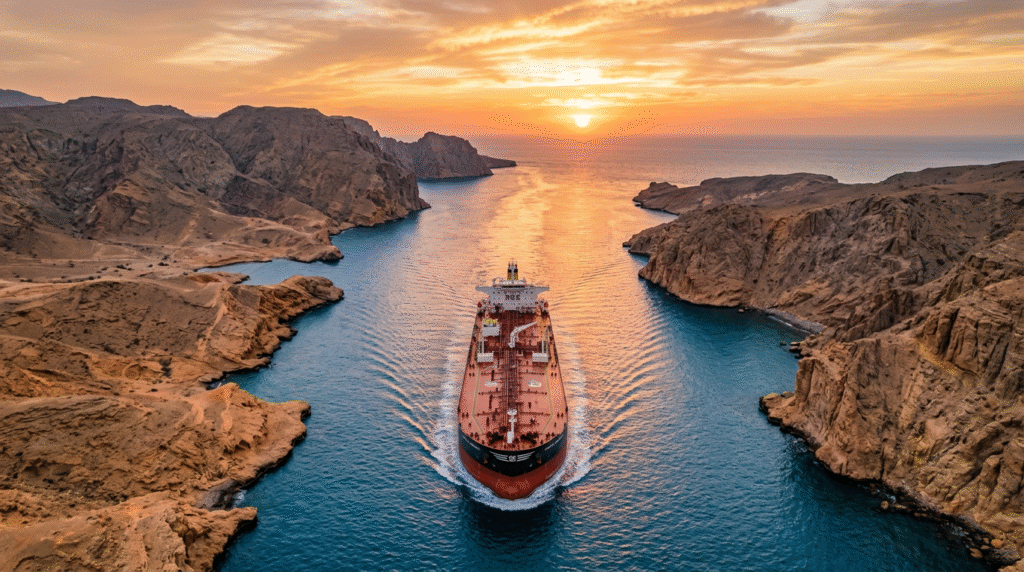
The Strait of Hormuz is 33 kilometres wide at its narrowest point. I have transited it more times than I can count. Each time with the same quiet respect for how much depends on that sliver of water. In peacetime, roughly one-fifth of the world’s oil and liquefied natural gas passes through it every day. Tankers, LNG carriers, container ships, bulkers. A constant procession of global trade, threading a needle between Iran and Oman.
Right now, that needle is closed.
Since late February 2026, the Strait has been effectively shut to mainstream commercial shipping. About 2,000 vessels remain trapped inside the Gulf. An estimated 20,000 seafarers are stuck on those ships. Men and women from the Philippines, India, Eastern Europe, and beyond. Unable to transit. Unable to sign off. Unable to go home.
Let’s talk about what that actually means.
How We Got Here
The crisis did not happen overnight. Tensions in the Gulf have been building for years. IRGC fast craft harassing transiting vessels. Escalating rhetoric about closing the Strait. Periodic skirmishes and tanker seizures. What changed in late February was the threshold being crossed from harassment into outright conflict.
Iran’s military moved quickly. They declared that ships going to certain ports would not be permitted through. They established what they call a new authority to vet transit applications, reportedly charging substantial fees per vessel in some cases. They published maps showing mined areas.
The practical effect has been near-total paralysis for international shipping. Major carriers and energy companies are not using the alternative channel offered by Iranian authorities. It is seen as legally questionable, physically unsafe, and commercially untenable.
By mid-March, war-risk insurers had suspended cover for tankers transiting the Strait. Without insurance, most owners simply cannot and will not transit, regardless of what any authority says on any given day.
The Numbers That Matter
Let’s be clear about the scale of what we are dealing with:
Oil flows disrupted. The International Energy Agency has called this the largest oil supply disruption in history. Bigger than the 1970s oil shocks.
Stranded vessels. Approximately 2,000 ships are anchored inside the Gulf, waiting. Reports indicate over 600 tankers alone are stuck, with another 240 waiting outside on the Gulf of Oman side.
Fuel costs. Marine fuel prices in Singapore have hit approximately USD 840 per metric ton, up from around USD 500 before the conflict. Transport & Environment estimates the industry is burning an additional EUR 340 million (USD 400 million) per day on fuel costs.
Freight rates. Spot rates on affected Asia-Europe and Asia-Middle East routes are running at three to four times pre-conflict levels.
Vessel speeds. Clarksons Research reports that average speeds for bulk carriers and container ships have dropped about 2% since late February, as operators slow-steam to conserve expensive fuel.
The Human Cost
This is the part that does not make the headlines often enough.
Twenty thousand seafarers are effectively marooned. They are not waiting in port hotels. They are onboard their vessels. At anchor. In tropical heat. Running generators. Managing provisions. Watching their contracts expire and their rotation dates come and go without relief.
The right of crew to refuse transit through high-risk zones under war risk clauses exists on paper. In practice, the pressure on crews is enormous. From commercial imperatives. From management. From the sheer uncertainty of not knowing when or if they will get home.
I have been at sea long enough to know what that kind of extended uncertainty does to a crew. It erodes morale. It strains mental health. It makes people want to sign off and never come back. The industry is already facing a shortage of qualified officers. This crisis will make it worse.
The IMO’s Maritime Safety Committee, meeting in London as I write this (MSC 111, 13-22 May), has the seafarer crisis on its agenda. It is encouraging that the issue is being raised at the highest level. But what seafarers need is not statements. It is a pathway home.
The Insurance and Safety Reality
Even if a political settlement were reached tomorrow, the Strait would not be safe for commercial shipping anytime soon.
It has been stated that mines may have been laid in the shipping lanes. Mine clearance operations have begun, but military assessments suggest it would take up to six months to clear the Strait to a standard that insurers would accept. Mines are not something you rush. One missed mine, one detonation under a laden tanker, and the environmental and human cost is catastrophic.
War risk insurance premiums have gone from approximately 0.25 percent of hull value before the crisis to as much as 5 percent now. That is a twentyfold increase. Even when clearance operations are complete, insurers will need time to recalibrate their risk assessments. The timeline for normal insurance availability is measured in months, not weeks.
And then there is the question of what safe means. Hundreds of fast craft continue operating in the area. Missile and drone threats remain. The maritime security environment in the Gulf has fundamentally changed. Even with mine clearance and a political ceasefire, the risk profile of transiting Hormuz will not return to what it was before the crisis.
What This Means for Global Trade
The simultaneous disruption at both Hormuz and the Red Sea means that, for the first time in modern history, both major Middle Eastern shipping corridors are compromised at once. Trade is being forced around the Cape of Good Hope. That adds roughly 3,500 to 4,000 nautical miles and 10 to 14 days to voyages between Asia and Europe.
This is not a temporary rerouting. It is a structural shift in trade patterns that will have consequences long after the current crisis resolves. Ports in West Africa are seeing demand for bunkering and repair services they never experienced before. Congestion is building in South African anchorages. European terminals are receiving out-of-sequence arrivals. Supply chains are adapting, but at enormous cost.
For Hong Kong, which lives and breathes maritime trade, the implications are direct. The longer voyages and higher costs eventually feed through to consumer prices. The bunker market, already squeezed, affects every vessel that calls in our port. And the seafarers stranded in the Gulf include many for whom Hong Kong is home or a regular port of call.
Where This Goes from Here
Diplomatic talks are under way. That is welcome. But it is not a return to normal.
Energy agencies, as of mid-May, assume no normal Hormuz traffic through late May at minimum. Most forwarders are advising clients to plan for four to six months of sustained disruption. Mine clearance, insurance recalibration, and the time needed to rebuild confidence in the safety of the Strait mean that even optimistic timelines point to the autumn before any kind of normalisation.
In the meantime, the industry adapts. Ships reroute. Costs rise. Crews wait.
What I Would Like to See
Three things, from someone who has spent their career at sea and now works in policy.
First, prioritise the seafarers. The IMO, flag states, and port states need to work together on a humanitarian corridor to enable crew changes and repatriation for the thousands trapped in the Gulf. This is not a political question. It is a basic human obligation.
Second, accelerate the alternative fuel transition. This crisis has exposed the shipping industry’s vulnerability to fossil fuel supply shocks in the starkest possible terms. The hundreds of millions per day in additional fuel costs is not a one-off. It is a signal. Alternative fuels, wind-assisted propulsion, and efficiency measures are not just environmental strategies. They are energy security strategies.
Third, recognise that chokepoint risk is now structural. Hormuz, the Red Sea, the Panama Canal, the Malacca Strait. Our industry depends on a handful of narrow passages that are vulnerable to disruption from conflict, climate, and geopolitics. Risk modelling needs to catch up with reality. So does contingency planning.
The Strait of Hormuz is 33 kilometres wide. It has always carried more than just ships. It carries the assumption that global trade can move freely. That assumption is no longer reliable.
Written by Nittin Handa. Master Mariner, former ship management executive, now working in maritime policy and regulation in Hong Kong.
This article reflects the author’s personal views and professional experience. It does not represent the position of any organisation with which he is affiliated.